
SEO for NDIS Providers Full Comprehensive Guide
Full comprehensive SEO for NDIS Providers guide. This guide is for NDIS Providers that want to improve their search appearance for increased awareness, clients, connections with support coordinators and more. From Local SEO & Multi Location Clusters, Technical SEO, Accessibility & Compliance to NDIS Content Strategy and AI Search, we have packed as much value as possible into this SEO guide for NDIS Providers.
- July 27, 2026
- Written by Hayu Son

Table of Contents
Conversion-Focused SEO & Keyword Strategy
Why does traditional search marketing fail for NDIS providers?
When most business owners first look into search engine optimisation, they expect a standard formula. You target high-volume search phrases, write a few service descriptions, and wait for enquiries to land in your inbox. In the National Disability Insurance Scheme (NDIS) ecosystem, however, that generic approach rarely produces meaningful results for growing organisations.
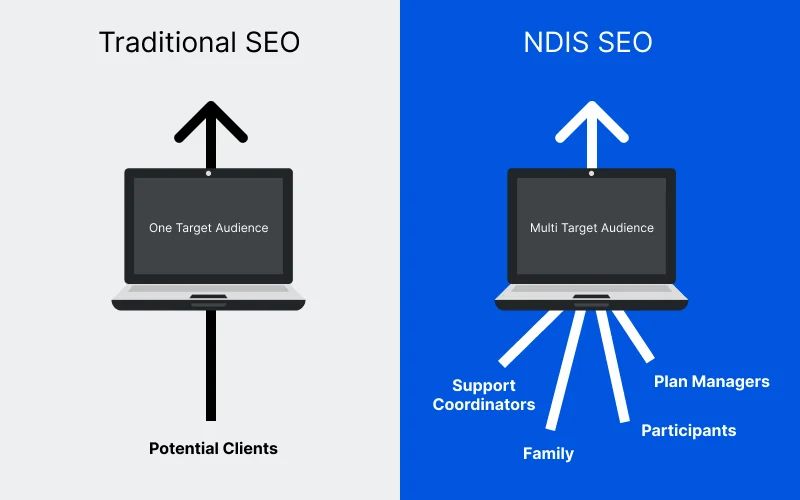
The fundamental issue is that the NDIS is not a single consumer market. Your website needs to communicate effectively with two completely distinct audiences who search using entirely different terms. On one side, you have participants, families, and primary carers searching for compassionate, local support. On the other side, you have Support Coordinators, Local Area Coordinators, and Plan Managers who search with strict operational and compliance terminology.
If your search strategy focuses exclusively on high-volume consumer phrases, you will likely attract website visitors who cannot utilise your services or lack appropriate funding. Conversely, if your content sounds like a regulatory manual, families seeking welcoming care will click away immediately. Achieving steady growth requires balancing these two perspectives across your website structure.
As someone who has partnered up with an NDIS provider in the past, I know exactly the constraints and opportunities that exist to grow as an NDIS organisation. Throughout this article we will explore how you can strike that balance between welcoming care and search optimisation.
How do NDIS keywords differ from standard search terms?
In standard consumer or business marketing, search intent is usually direct and immediate. Someone searching for a local plumber or accountant wants a quick quote and a direct phone number. In the NDIS sector, search intent is layered across decision-makers, funding categories, and specific participant goals.
Participants and family members typically use emotional, outcome-focused language when searching online. They search for terms like “disability support worker near me,” “help with daily tasks,” or “group activities for young adults with autism.” They want to understand what living with your support feels like, how your staff interact with clients, and whether your team understands their specific day-to-day challenges.
Referral partners use an entirely different vocabulary when searching on behalf of participants. Support Coordinators search for specific line items, capacity constraints, and immediate vacancy updates. Referrals depend heavily on understanding these nuances, which is why reviewing a targeted Support Coordination Keyword Playbook helps clarify how professional intermediaries look for service providers online.
How should you map keywords to NDIS funding categories?
One of the most common mistakes we see on provider websites is bundling all services onto a single generic page. When a visitor lands on a page that lists every service from lawn mowing to complex nursing without clear structure, search engines struggle to understand what the page actually specialises in. This lack of structure creates friction for both Google and your human visitors.
Structuring your website around specific funding categories allows search engines to map your content directly to what people are looking for. Separating your core services from capacity building options creates clear pathways for visitors. For example, structuring dedicated Core Supports vs Capacity Building Landing Pages allows you to target distinct search queries for daily activities while separately capturing participants looking for skill development or therapy funding.
This structured approach directly affects your website’s ability to convert traffic into active participants. When a Support Coordinator lands on a page specifically tailored to social and community participation, they can quickly confirm that your service matches their participant’s plan goals. Clear URL mapping turns generic organic traffic into qualified enquiries.
How do high-yield accommodation and clinical keywords drive growth?
Certain NDIS service areas require significantly higher investment in long-term relationship building and trust. Specialised accommodation is a primary example, where search queries carry immense decision weight for families and coordinators alike. Because vacancies represent substantial operational value, targeted search visibility for these specialised services becomes critical for maintaining occupancy rates.
When optimisation efforts focus on high-yield terms, content must address both physical building specifications and participant compatibility. Combining technical features with genuine care quality is essential. Implementing proven SIL & SDA SEO Strategies ensures your accommodation pages rank for location-specific vacancy searches while providing families with the detailed information they need before arranging a site visit.
A similar principle applies when targeting clinical services and therapeutic supports. Participants searching for allied health professionals are looking for clinical expertise, registration details, and specific therapeutic modalities. Tailoring your digital presence through specialised SEO for Allied Health NDIS Providers helps speech pathologists, occupational therapists, and physiotherapists connect with families actively seeking clinical support in their local area.
How do you capture bottom-of-the-funnel decision-makers?
By the time a participant or coordinator reaches the final stage of choosing a provider, they are no longer searching for general information about the NDIS. They are actively comparing two or three shortlisted organisations to determine which one offers the right cultural fit, availability, and quality of care. This final decision phase requires content specifically designed to answer comparison questions directly.
Creating transparent, honest comparison content builds credibility at the exact moment a prospect is deciding whether to make contact. Utilising established Competitor Comparison Frameworks for NDIS allows you to highlight your unique operational strengths, service standards, and intake processes without disparaging other providers in your region.
When you provide clear information regarding intake wait times, service regions, and staff matching processes, you make the decision easy for busy coordinators. The goal of bottom-of-the-funnel pages is not to convince everyone that you are the right fit, but to demonstrate clearly why you are the best choice for the specific participants you serve best.
Building a sustainable online presence for your NDIS organisation
Investing in search visibility for your NDIS organisation is a long-term strategy rather than a quick fix. Search engines reward websites that consistently demonstrate expertise, local relevance, and clear user experiences over time. When your keyword strategy reflects the actual ways participants and referral partners search, your website becomes an ongoing lead generator for your business.
You could certainly handle this research and content structure internally if you have the time and internal resources to stay updated on search engine guidelines. However, managing intake, compliance, and support workers leaves most NDIS directors with very little spare time to manage technical website updates and keyword strategies.
If you would rather focus on delivering quality support while ensuring your website consistently attracts qualified participant enquiries, that is exactly where we step in. At Webberly, we build clear, high-performing websites and ongoing search strategies tailored specifically for growing Australian businesses. If you would like expert SEO services tailored to your NDIS business, get in touch today.
Local SEO & Suburban Dominance
Why does location matter so much in NDIS service delivery?
Disability support is inherently local. When a participant, family member, or Support Coordinator looks for an NDIS provider, they are rarely looking for a national brand located hours away. They want reliable, local support workers who live in the community, understand local transport options, and can arrive on time for morning shifts or community access programs.
This localized intent completely changes how search engines evaluate your website. Google aims to connect searchers with the most relevant local options nearby. If your online presence fails to clearly signal where your team operates, your website will be overlooked in favour of competitors who have established strong geographic relevance in their immediate suburbs.
When a provider tries to target an entire capital city with a single generic website page, search engines struggle to understand where their actual service boundary lies. Consequently, the business loses visibility in the specific suburbs where they have real capacity and available support workers. Building geographic relevance is essential for converting local search traffic into active participants.
How do map-pack rankings drive local enquiries?
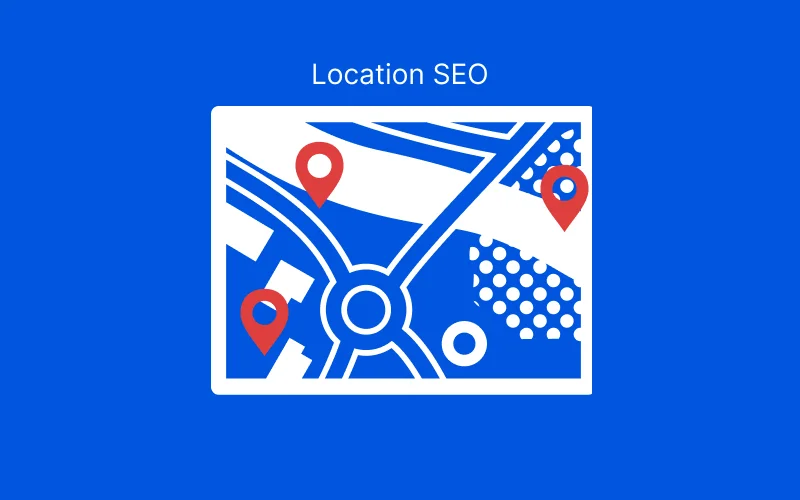
When someone searches for disability support services in a specific suburb, Google usually displays three local map listings above the standard organic search results. These map-pack listings capture a significant portion of all clicks because they immediately display location, contact details, opening hours, and real customer feedback.
For NDIS providers, appearing in these top map spots can completely change your intake volume. Participants and coordinators often choose a provider directly from the map results because it reassures them that the service operates nearby. Optimising your listing requires a structured approach to your business profile, categories, service areas, and operational information. Applying precise Google Business Profile (GBP) Optimization for NDIS ensures your profile presents accurate data to search algorithms while giving families clear reasons to reach out.
A fully optimised map profile also acts as a powerful trust builder before a prospect even visits your main website. When your profile clearly lists your operational areas, service categories, and verified business details, it eliminates guesswork for busy coordinators trying to fill immediate support schedules.
How can you scale across multiple regions without duplicate content penalties?
As your provider business grows, you will likely expand your service delivery beyond your home suburb into neighboring council areas and surrounding regions. A common mistake many business owners make during this expansion phase is copying and pasting the exact same service text across dozens of suburb pages, simply swapping out the location names.
Search engines quickly recognize duplicate text across multiple pages and will often penalize or ignore those pages altogether. To rank effectively across multiple areas, each location page needs unique, genuine local context. Utilizing a proven Suburban & Location Page Architecture allows you to scale your geographic footprint cleanly, giving search engines distinct, valuable content for every community you serve.
Effective location pages do far more than just name drop a suburb. They highlight local community hubs, nearby accessible venues, regional transport links, and specific support teams operating in that district. This localized depth shows both Google and potential clients that you are truly active within their local community.
What role do local citations and NDIS directories play in search visibility?
Search engines rely on external validation to confirm that your business is legitimate and physically located where you claim to be. One primary way search algorithms verify this information is by cross-referencing your business name, physical address, and phone number across online directories and industry databases.
In the NDIS ecosystem, having consistent business listings across reputable healthcare directories, community hubs, and provider networks creates strong trust signals. Executing a structured Local Citation & NDIS Directory Strategy ensures your contact information remains completely uniform across the web, strengthening your website’s overall search authority.
Inconsistent directory listings can actively harm your local search rankings. If one directory lists an old office address while another shows a different phone number, search engines become less confident in your business data. Maintaining accurate, high-quality citations builds the baseline authority needed to outrank competing regional providers.
How do you manage reviews and social proof within NDIS compliance rules?
Social proof is a critical factor for families and coordinators selecting a support provider. People want to know that current participants feel respected, safe, and well supported. However, gathering and publishing feedback in the NDIS space requires careful attention to compliance rules and participant privacy.
Unlike traditional consumer businesses, disability service providers must navigate strict guidelines regarding testimonials and participant confidentiality. Following established protocols for Managing Reviews & Reputation Under NDIS Guidelines allows you to showcase genuine positive feedback safely, building strong public trust without breaching privacy regulations or Quality and Safeguards standards.
Encouraging compliant feedback on public profiles gives search engines clear signals that your organisation is active and highly regarded. When families read authentic, respectful feedback from other local participants, it provides the reassurance they need to make contact with your intake team.
Building a strong local footprint for your provider business
Dominating local search results is not about tricking search algorithms or filling your website with lists of suburb names. It requires establishing genuine local relevance, maintaining precise business data, and providing clear information for the specific communities you serve.
Many NDIS directors attempt to handle local search optimisation themselves, but keeping up with changing map algorithms, creating unique location content, and maintaining directory accuracy takes substantial time. When your primary focus needs to be on participant care, staff coordination, and compliance, digital technicalities can quickly become overwhelming.
If you would prefer to focus on delivering quality disability supports while ensuring your organisation consistently dominates local search results in your target suburbs, we are here to help. At Webberly, we design clear local search strategies and custom web systems that help Australian providers attract steady, qualified enquiries from their surrounding communities. Get in touch with us today for a tailored local SEO strategy for your business.
Technical Foundation, WCAG Accessibility and Schema for NDIS Websites
Why does Google hold NDIS websites to a higher technical standard?
When most business owners think about search engine optimization, they focus heavily on keywords, blog articles, and location pages. While visible content is essential, the technical engine running underneath your website carries equal weight, especially in the healthcare and disability sectors. Google evaluates websites based on the potential impact their information can have on a person’s health, safety, or financial well-being.
In search engine terminology, disability support services fall squarely under the “Your Money or Your Life” (YMYL) assessment umbrella. Because vulnerable individuals and their families rely on NDIS providers for critical care, Google places a far higher expectation on the accuracy, security, accessibility, and overall technical performance of these websites.
If a local plumbing or landscaping website loads slowly or lacks basic accessibility features, search algorithms might still show it on page one due to a lack of local competitors. However, if an NDIS provider website suffers from technical glitches, poor mobile performance, or broken code structures, Google will actively hesitate to send users there. Meeting these higher standards is not just about compliance; it is about establishing technical trust with both search algorithms and vulnerable site visitors.
What does WCAG accessibility mean for search engine visibility?
Accessibility is often treated as an afterthought in web design, handled only when a compliance issue is raised. In the disability sector, however, accessible digital design is a fundamental requirement. Your website is often the very first interaction a prospective participant or family member has with your organisation. If your site is impossible to navigate using a screen reader, lacks keyboard navigation, or uses unreadable colour contrast, you are locking out the exact individuals you exist to support.
From an SEO perspective, search engines favor accessible websites because accessible design aligns almost perfectly with modern technical ranking criteria. Search engine crawlers interpret web pages in a remarkably similar way to screen readers; they read code, rely on clear heading hierarchies, look for descriptive image text, and require logical navigation paths.
When you align your digital presence with established standards, you create a seamless experience for every visitor regardless of their physical or cognitive abilities. Reviewing dedicated guidance on WCAG 2.1 & Accessibility as an SEO Ranking Factor demonstrates how inclusive design principles directly improve your site’s search visibility, proving to Google that your organisation prioritises user experience at every level.
How should multi-service NDIS agencies structure their websites?
As an NDIS provider grows, its service offerings usually expand. A provider that started with basic household task assistance might eventually grow to offer Support Coordination, Allied Health, Supported Independent Living (SIL), and Youth Community Access programs. Without a planned technical blueprint, this growth often leads to a messy website structure where services are buried under confusing drop-down menus or scattered across disorganized pages.
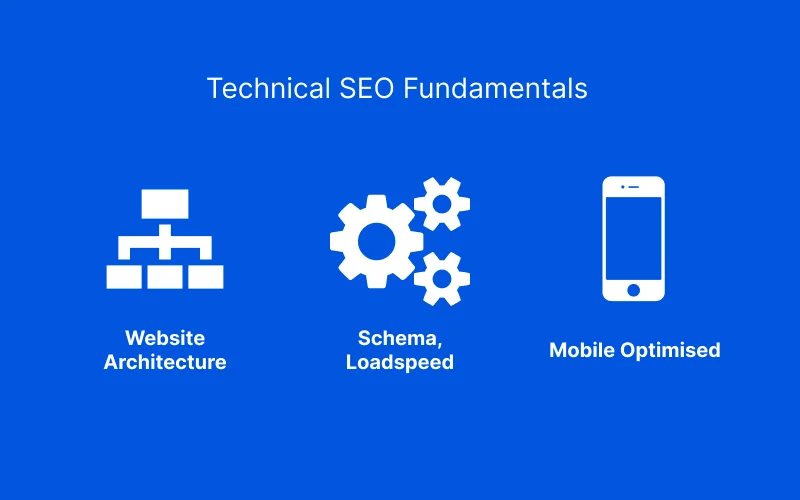
When a search engine crawler scans your website, it relies on a logical, hierarchical architecture to understand how your services relate to one another. If your technical architecture is cluttered, search engines will struggle to identify your core specialisations, leading to lower rankings across all your service offerings.
A well-structured site uses clear parent-child URL relationships and clean internal linking paths. Implementing a tailored Site Structure for Multi Service NDIS Agencies ensures that search engines and human visitors can instantly navigate from your high-level service categories down to specific suburb vacancies, therapy options, or line-item supports without getting lost.
How do mobile experience and technical speed impact conversion rates?
A significant portion of search traffic for NDIS services happens on mobile devices. Support Coordinators research providers while travelling between client meetings, support workers check service details on shift, and busy parents look for care options late at night on their phones. If your website takes more than a few seconds to load on a mobile connection, those visitors will tap the back button and visit a competitor.
Google uses a specific set of technical metrics, known as Core Web Vitals, to measure how fast, responsive, and visual stable a page is while loading. If buttons jump around while a page renders, or if images take several seconds to load over a standard mobile network, search engines will lower your position in local search results.
Ensuring your mobile experience is flawless directly protects your intake pipeline. Following best practices for Core Web Vitals & Mobile UX for NDIS Sites guarantees that your pages load quickly and cleanly across every device, giving stressed family members and busy coordinators immediate access to the information they need.
How does schema markup translate your services for search algorithms?
When a search engine visits your website, it reads human language as best as it can. However, behind the visible text, you can include a hidden layer of structured code known as Schema markup. Think of Schema as a direct, standardized translator that tells search engine algorithms exactly what your business is, where you operate, and what specific NDIS services you provide.
Without structured data, a search engine has to guess whether “Supported Accommodation in Parramatta” refers to an active service vacancy, a news article, or a blog post. With precise Schema code installed, you tell the search engine directly: “This page represents a local healthcare organization offering a specific disability accommodation service in this geographic coordinate.”
Adding this structured data layer makes your search listings far more detailed and prominent in search engine result pages. By following a clear Schema Markup Guide for Disability Services, you can highlight opening hours, precise service locations, registered business details, and specific support categories directly inside Google’s search results, making your listing stand out from standard web links.
Summary of key technical priorities
Building a high-performing digital presence for an NDIS organisation requires balancing technical precision with empathetic design. To keep your website visible and effective, keep these core principles in mind:
Treat accessibility as a priority: Designing for WCAG compliance improves user experience for all visitors while providing search engine crawlers with clean, readable site structures.
Maintain a clean site hierarchy: Organize expanding service lines logically so both human visitors and search algorithms understand your core offerings.
Optimize for mobile speed: Fast, stable mobile pages prevent potential clients from bouncing off your site during critical decision-making moments.
Implement structured data: Use Schema code behind the scenes to help search engines accurately index your local services and business details.
E-E-A-T, Digital PR and Trust Building for NDIS Providers
How do search engines evaluate trust in the disability sector?
When a participant or Support Coordinator searches online for disability services, they are not looking for a casual purchase. They are searching for individuals and organisations they can trust with personal care, daily independence, and safety. Search engines recognise the weight of these choices. Google categorises disability and healthcare services under its “Your Money or Your Life” (YMYL) standards, meaning algorithms scrutinise healthcare websites far more strictly than standard commercial businesses.
To decide which providers deserve top visibility, search engines evaluate four key pillars: Experience, Expertise, Authoritativeness, and Trustworthiness (E-E-A-T). Proving these qualities requires more than publishing basic statements on a homepage. Algorithms look for clear evidence of registered credentials, genuine staff experience, transparent policies, and authoritative references across the web.
Understanding how to build this digital credibility is critical for long-term visibility. Reviewing our detailed framework on Establishing E-E-A-T in the Healthcare & Disability Niche helps clarify how search engines measure real-world reputation and how you can display that proof across your digital footprint.

Why does top-of-funnel educational content build authority?
Many provider websites focus exclusively on hard-sell service pages. While clear intake forms are essential, relying solely on commercial pages misses a significant opportunity to connect with participants early in their decision-making process. Families and carers often spend months researching how NDIS funding works, how to prepare for plan reassessments, or how specific supports function in daily life.
When your website provides helpful, easy-to-understand educational resources, you build genuine trust before a participant ever needs to submit an enquiry. Publishing comprehensive resources and guides positions your team as a reliable voice in the sector. Creating practical, user-focused materials such as Creating High Converting NDIS Participant Guides allows you to answer common sector questions while gently guiding visitors toward your core services.
Educational content also creates natural opportunities for other industry websites, community groups, and disability advocates to reference and link back to your site. When reputable industry bodies point their visitors to your resources, search engines take notice. That external recognition signals to Google that your organisation is an established authority in disability support.
How do you build digital PR and backlinks in Australian healthcare?
Search engines rely heavily on external votes of confidence to determine which websites are genuinely trustworthy. In search engine optimisation, these votes of confidence come in the form of backlinks—links from external websites pointing back to yours. However, acquiring generic links from low-quality directories or unrelated blogs can actually hurt your search presence.
In the Australian healthcare and disability sector, link building must be deliberate, authentic, and compliant. Search engines look for links from relevant local sources, such as Allied Health associations, community health hubs, local council directories, and recognized industry publications. Obtaining a link from a respected regional health network carries far more weight with Google than dozens of links from generic marketing directories.
Building these relationships requires a structured outreach approach. Developing a compliant strategy for Digital PR & Link Building in the Australian Healthcare Sector allows your organisation to secure high-tier mentions, participate in community discussions, and earn authoritative backlinks that elevate your site’s overall search standing.
Why does original, human-written content matter for NDIS providers?
With the widespread availability of artificial intelligence tools, many business owners are tempted to generate dozens of generic blog posts in a matter of minutes. While AI can assist with research and outlines, relying on auto-generated text for healthcare content presents serious risks. Search engines actively filter out low-quality, repetitive content that fails to offer unique insights or first-hand perspective.
NDIS participants and Support Coordinators quickly spot generic, templated language. They want clear information written by professionals who understand NDIS Practice Standards, complex care needs, and real-world service delivery. Search algorithms evaluate content using a principle called “information gain”—measuring whether your page offers fresh, valuable information that cannot be found on a hundred other websites.
Sharing real operational experience, clarifying complex funding rules, and providing practical advice ensures your content stands out to both human readers and search crawlers. Applying principles from our guide on Information Gain & Avoiding Low Quality AI Content ensures your website remains compliant, authoritative, and helpful for the families relying on your support.
Summary of core trust principles
Building digital authority is an ongoing commitment to quality, accuracy, and clear communication. To ensure your organisation maintains a trusted presence online, focus on these core priorities:
Demonstrate real credentials: Display your registration status, staff qualifications, and quality standards prominently across your site.
Answer practical participant questions: Publish thorough educational guides that simplify NDIS processes for families and carers.
Earn high-quality local links: Focus on securing backlinks from reputable Australian healthcare, community, and industry sources.
Prioritise original perspective: Ensure your content reflects genuine operational experience rather than generic, automated text.
Building an authoritative digital brand for your organisation
Establishing real digital trust takes time, consistent effort, and a deep understanding of how both search engines and human decision-makers evaluate healthcare providers. When I first started helping growing Australian businesses build their online presence, I saw many dedicated providers struggle to gain search visibility simply because their websites failed to communicate their real-world expertise to search engine algorithms.
You could certainly spend time researching search quality guidelines, writing educational guides, and managing digital outreach yourself. However, running a busy NDIS organisation leaves very little time to audit technical trust signals, coordinate PR outreach, and produce specialized content.
If you would rather focus on supporting your participants and managing your team while ensuring your digital presence builds long-term authority and steady participant enquiries, that is where we can step in. At Webberly, we design clear search strategies and high-performing SEO strategies help Australian providers establish lasting trust in their local communities.
The Next-Gen Search Landscape: AI and Voice Search for NDIS Providers
How is search discovery changing for NDIS providers?
For many years, online search followed a predictable pattern. A participant, family member, or Support Coordinator typed a short phrase like “SIL provider Brisbane” into a Google search bar, looked through a list of blue links, and clicked on a few websites to read through their service options.
That search pattern is shifting rapidly. Today, people interact with search engines using complete, conversational sentences, smart speakers, and AI-powered summary tools. Rather than simply returning a list of links, modern search engines synthesize information across multiple websites to answer complex queries directly on the results page.
For NDIS providers, this evolution changes how potential participants discover your services. If your website is only optimized for traditional keyword matching, you risk becoming invisible to a growing segment of searchers who use conversational queries and AI assistants to find local support options.

What do Google AI Overviews mean for your organisation?
Google now frequently presents an AI-generated summary at the top of search results for complex topics. These snapshots digest content from high-authority websites across the web, answering user questions directly before showing traditional search results.
In the NDIS sector, where users often search for detailed information about funding rules, support eligibility, and provider options, AI summaries play a major role in guiding searchers. If your website content is included as a cited source in these overviews, your brand gains immediate credibility and primary visibility.
Getting featured in these summary blocks requires clear, structured information that directly answers real-world questions. Following proven approaches for Optimizing for Google AI Overviews in the Disability Sector helps ensure your organisation provides the authoritative, factual content that search engines rely on when building AI responses.
Why is voice search so critical for disability service accessibility?
Voice-assisted search technologies have moved far beyond a convenient tool for checking the weather. For many NDIS participants with physical disabilities, vision impairments, or mobility challenges, voice search using tools like Siri, Google Assistant, or smart speakers is their primary way to navigate the internet independently.
Voice search queries look and sound fundamentally different from typed searches. Someone typing on a phone might search for “NDIS physio Brisbane,” whereas someone using voice search will ask a full question, such as “Who is an accessible NDIS physiotherapist near me with availability this week?”
Optimising for these natural, long-tail conversational questions is both an accessibility priority and a practical search strategy. Implementing a deliberate Voice Search Strategy for Accessibility ensures your service pages contain clear, conversational answers that smart assistants can easily read aloud to prospective clients.
How should you balance long-term SEO with immediate paid ads?
As search technology becomes more sophisticated, many NDIS business owners struggle to decide where to allocate their marketing budget. Should you invest in long-term search engine optimisation, or rely on paid advertising platforms like Google Ads to generate immediate enquiries?
There are valid reasons for both approaches, and the right decision usually depends on your immediate operational goals. Paid Google Ads can deliver fast visibility when you have urgent vacancies in a Supported Independent Living property or immediate capacity in an allied health team. However, paid ads stop generating leads the moment you stop paying for clicks.
Organic search strategy builds a durable asset that delivers consistent, qualified participant enquiries over time without a perpetual cost per click. Evaluating the strategic balance between SEO vs Google Ads for NDIS Growth helps you build a sustainable growth framework that aligns with your intake needs and cash flow.
Preparing your NDIS organisation for the future of search
Navigating changes in search technology can feel complex, but the core objective remains simple: making sure the participants and coordinators who need your support can find you easily. Whether someone uses a traditional desktop computer, an AI assistant, or a voice command, your digital presence must clearly communicate who you are, where you operate, and how you help.
You could certainly spend time monitoring changing search algorithms, updating website schema, and restructuring content for AI tools yourself. However, managing staff rosters, maintaining compliance, and delivering high-quality care leaves most NDIS directors with very little time to study search engineering.
If you would prefer to focus on delivering excellent outcomes for your participants while ensuring your organisation stays ahead of digital search trends, we are here to help. At Webberly, we build clear search strategies and fast, accessible websites designed to help growing Australian providers attract consistent, qualified enquiries.

Hayu Son
SEO Consultant
Enjoying what you’re reading? Join our newsletter and get practical insights, proven strategies, and actionable tips to help grow your business online, delivered to your inbox every Saturday.
Looking for Affordable SEO?
Look no further. Full scale SEO done for you from $597. Book a time to chat!
Ready to have your NDIS Business grow online?
Whether you are looking to support more participants, get connected with more support coordinators or just establish your authority online, we are ready to implement your SEO strategy.